
Factory licence vs CFE and CFO: which approvals a new factory needs in Telangana
What CFE, CFO and the factory licence each cover, how the new OSH Code changes things, and the order to get them in.
Starting a manufacturing unit in Telangana means dealing with approvals from several departments. Three of the most important are Consent for Establishment (CFE), Consent for Operation (CFO) and the factory licence. They are often confused, so here is what each one covers and the order to get them in.
Consent for Establishment (CFE)
CFE is issued by the Telangana Pollution Control Board (TGPCB) under the Water (Prevention and Control of Pollution) Act, 1974 and the Air (Prevention and Control of Pollution) Act, 1981. You need it before you start construction or install machinery. The board looks at your site, process, raw materials, expected effluents and emissions, and the pollution controls you plan to install.
Consent for Operation (CFO)
CFO is also issued by TGPCB, after construction and before production starts. The board checks that the pollution controls promised at the CFE stage are actually in place. CFO has a validity period and must be renewed before it expires.
Red, orange, green and white categories
Industries are classified as red, orange, green or white according to their pollution potential. The category decides how closely your application is scrutinised, the consent fee and how long the consent is valid. White category industries generally don't need CFE or CFO, though they may still need to inform the board.
The factory licence
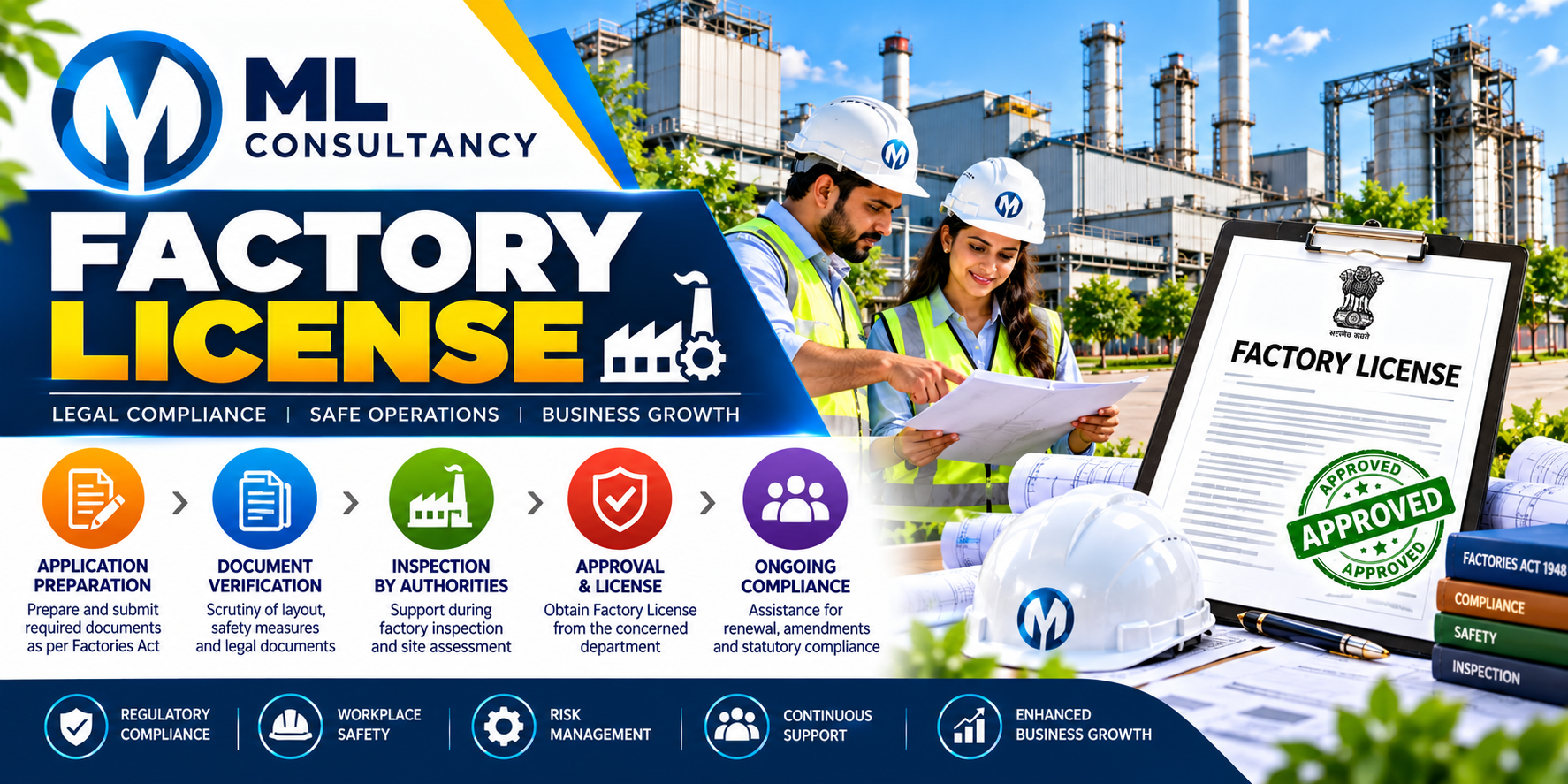
The factory licence comes from the labour department's factories wing. It deals with worker safety, health and welfare: building layout, machinery guarding, ventilation, lighting, first aid and similar requirements. Traditionally you get plan approval before construction and the licence before production starts.
What changed in November 2025: the Occupational Safety, Health and Working Conditions (OSH) Code, 2020 came into force on 21 November 2025. It replaces the Factories Act, 1948 and twelve other central labour laws, and introduces a single registration, licence and return for establishments. Existing licences and state rules continue during the transition, so check which forms and portal apply to your unit when you file.
The order to follow
Confirm your pollution category, land use and zoning.
Apply for CFE, and environmental clearance if your project needs it.
Get factory plan approval and building permission.
Build, and install pollution control equipment and safety systems.
Get your Fire NOC, where it applies.
Apply for CFO and the factory licence or registration.
Start production, and keep track of every renewal date.
In Telangana, most of these approvals can be applied for through the TG-iPASS single-window system.
How ML Consultancy helps
We map every approval your project needs, prepare and file the applications, and coordinate with the pollution control board, the factories department and the fire department until each approval is issued. See our Consent for Establishment, Consent for Operation, factory licence and Fire NOC services, or contact us for a free consultation.
This article is general guidance, not legal advice. Requirements change, especially during the labour code transition, so confirm current rules with the relevant department.